Sphynx
Features


Origins
The origin of the modern Sphynx does not date back to ancient Egypt, despite its name and its resemblance to the feline representations of that culture. The breed as we know it today was born in Toronto, Canada, in 1966, when a domestic cat gave birth to a hairless kitten called Prune, the result of a spontaneous genetic mutation. Its breeders saw something unique in it and began a selective breeding programme to fix this trait, crossing it with the Devon Rex and other breeds to broaden the genetic base and maintain the health of the population.
In parallel, during the 1970s and 80s, other hairless cats appeared in Minnesota and Toronto that were integrated into the breeding programmes. The breed was progressively recognised by various international feline associations, though not without debate, as some questioned whether the absence of coat was a natural trait or an undesirable alteration. Today, the Sphynx is recognised by the world's leading feline organisations and is a common breed, with a community of passionate breeders and owners who care for its health and wellbeing.
Characteristics and aptitudes
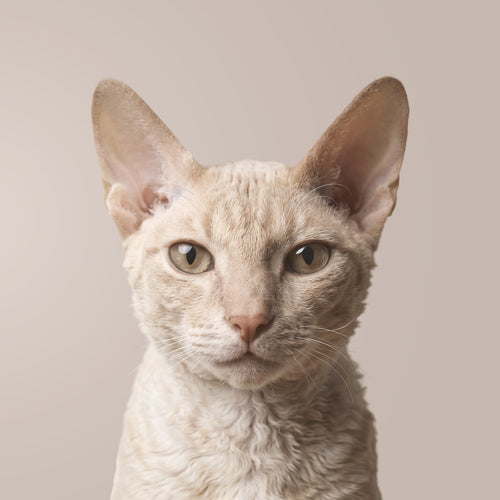
The Sphynx is a medium-sized cat with a unique appearance that combines its characteristic bare skin with a surprisingly defined musculature and a rounded belly. The skin can be any colour or pattern, and to the touch it resembles warm velvet or suede. Wrinkles are abundant, especially on the head, giving it an intense, almost human expression. Its ears are large and wide open, its eyes are lemon-shaped or almond-shaped, and its front paws are noticeably shorter than the hind ones.
In terms of temperament, the Sphynx is extroverted, playful and extraordinarily sociable. It knows no personal boundaries: if it can be on top of you, it will be. It is a cat that follows its owners from room to room, participates in all household activities and greets visitors enthusiastically rather than hiding. It gets on well with children, other cats and, frequently, with dogs. Its activity level is high, even in adulthood, so it needs toys, climbing structures and company. A bored Sphynx is a Sphynx looking for trouble.
Care
Caring for the Sphynx has its particularities. Without fur to absorb the skin's natural oils, these accumulate on its surface, meaning it needs regular baths (generally every one to two weeks) to stay clean and avoid irritations. It is recommended to use products specific to sensitive skin or for hairless cats, and to dry them thoroughly after bathing to prevent chilling. It is also important to clean its ears frequently, as wax accumulates more quickly without fur to act as a filter.
Protection from the cold is essential: the Sphynx has no fur to insulate it, so it needs an adequate ambient temperature at home and, where possible, accessories such as blankets or cat clothing in the colder months. Paradoxically, it also needs to be protected from direct sun exposure, as its skin can burn. The diet must be energy-rich and high quality, as its metabolism is faster than that of coated breeds and it needs a relatively higher caloric intake.
Most common diseases
The most important disease to monitor in the Sphynx is hypertrophic cardiomyopathy (HCM), a heart condition involving thickening of the heart walls that is relatively common in the breed. It can appear at any age and progress silently for years before showing obvious symptoms. For this reason, it is essential to carry out periodic echocardiograms (at least once a year in adult cats) to detect it in its early stages and manage its progression with appropriate treatment.
Skin problems may also arise, such as dermatitis, allergies or superficial infections resulting from the accumulation of grease on the skin when hygiene is not correct. Hereditary muscular myopathy is another condition documented in the breed, though less frequent. With a rigorous hygiene routine, a warm and protected environment, regular cardiac check-ups and a diet adapted to its specific needs, the Sphynx can enjoy a long, healthy and, above all, affectionate life.
If you have a Sphynx, its diet should accompany its unique metabolism and special energy needs. At Onlyfresh you will find options for natural, high-quality nutrition for cats, designed to keep its skin healthy, its heart protected and its energy at its peak at every stage of its life.